Request a Callback

+971 43801666
 Jul 08, 2026

Quick AnswerTop Revit Structure skills for your resume in 2026 include structural modelling, reinforcement detailing, BIM coordination, clash detection, and construction documentation. These Revit Structure skills are essential for landing jobs in BIM-driven construction and engineering roles. |
Revit Structure is no longer just a nice-to-have tool; it is a hiring prerequisite in 2026.
Let's explore what Revit is and why everyone is turning to Revit to understand the foundations of Autodesk Revit Structure.
|
What is Revit Structure?
Revit Structure is a BIM-based software used by structural engineers to design, model, analyse, and document building structures in a collaborative digital environment.
|
With over 85% of AEC firms globally mandating BIM workflows, knowing which Revit Structure skills to showcase on your resume can be the difference between landing an interview and being filtered out by an ATS.
Revit Structure is widely used in metro rail, airport, and smart city projects and is actively adopted by global EPC firms for BIM-driven design and coordination workflows.
This article breaks down the 10 most in-demand Revit Structure skills, why each matters, and exactly how to frame it on your resume.
| Table of Contents |
| 1. What Are the Top 10 Revit Structure Skills Employers Look for on a Resume? 2. Key Takeaways 3. FAQs |
BIM Skill Trends
85%AEC firms require BIM skills in job postings $89KAverage salary for BIM-proficient structural engineers 3×More callbacks for resumes listing Revit over AutoCAD only Top 5Most searched engineering software skill on LinkedIn in 2025 (Source: LinkedIn) |
To excel in the AEC employment market in 2026, professionals need to demonstrate in-Demand BIM Structural Skills to meet industry demands. The advantages of learning Revir structure are that you can acquire job-ready skills, high pay and exceptional career opportunities.
The top 10 Revit Structure skills for your resume are:
Structural Modelling & Framing Layout
Analytical Model Creation & Validation
Reinforcement Detailing (Rebar & Bar Sets)
Structural Families & Component Creation
Coordination with Architectural & MEP Models
Quantity Takeoffs & Material Scheduling
Construction Documentation & Sheet Sets
Cloud Collaboration with Revit Worksharing
Revit API & Dynamo Automation
Navisworks Integration & Clash Detection
To excel in the AEC employment market in 2026, professionals need to demonstrate in-Demand BIM Structural Skills to meet industry demands.
The advantages of learning Revit Structure are that you can acquire job-relevant skills, high pay and exceptional career opportunities.
Let’s discuss each Revit Structure resume skill in detail here.
Structural modelling & framing layout accuracy is a core Revit Structure skill for your BIM professional resume, which requires the following abilities:
How to Showcase Revit Structure Skills on a Resume?Showcase Revit Structure skills on a resume by adding your BIM-related skills with corresponding project examples and quantifiable achievements. Highlight your Revit Structure resume skills, such as 3D Modelling, Reinforcement Designing, BIM Coordination, and Clash Detection in detail. ✔ Example Skills:
Experience:
Advice: Apply the action + tool + achievement formula to clear ATS tests. It is better to take Revit Structure Certification Courses to upskill your career. By following this format, you can solve your doubt about “What Revit Structure skills should I put on my resume?” |
Analytical model creation & validation in Revit Structure is used to perform structural analysis via software like ETABS, SAP2000, or Robot Structural Analysis.
The reinforcement detailing ability within Revit enables structural engineers and detailers to place individual rebars, rebar groups, and reinforcement bars inside concrete members.
The key reinforcement detailing skills in Revit Structure are:
Structural families & component creation are the building blocks of a Revit project. The major Revit structure skills linked to families and component creation are:
Coordination with architectural & MEP models is a necessity as no structural model lives in isolation. The key coordination skills with architectural & MEP models needed are:
Quantity takeoffs & material scheduling is one of the most powerful skills in Revit Structure, which includes:
Construction documentation & sheet sets help to get from a model to a complete, issue-ready drawing package, which is among the major Autodesk Revit structure skills that require discipline and system knowledge.
The construction documentation & sheet sets skills you need to excel are:
|
The integration of AI-enabled capabilities into the design process does not replace people; instead, it empowers them to focus on outcomes.” - Amy Bunszel, EVP, AEC Solutions, Autodesk
|
Cloud Collaboration with Revit Worksharing enables multiple engineers to work on the same model simultaneously using central files, local files, and Autodesk Construction Cloud for real-time coordination and better project control.
The cloud collaboration skills that employers expect from Revit Structure professionals are:
Revit API & Dynamo automation is among the core Revit Structure skills that put you in the top 5% of Revit users. The major Revit API & Dynamo automation skills are:
Navisworks Manage is the industry-standard tool for federated model review and clash detection.
The key Navisworks integration & clash detection skills needed in your resume are:
Since the requirement for BIM in UK government projects is increasingly becoming common practice in private sector projects around the world,
Navisworks coordination can present your expertise, playing the role of a key Revit Structure skill for fresh graduates.
The benefits of learning Revit Structure are not limited to these 10 skills, but these skills are the foundation to build a promising career.
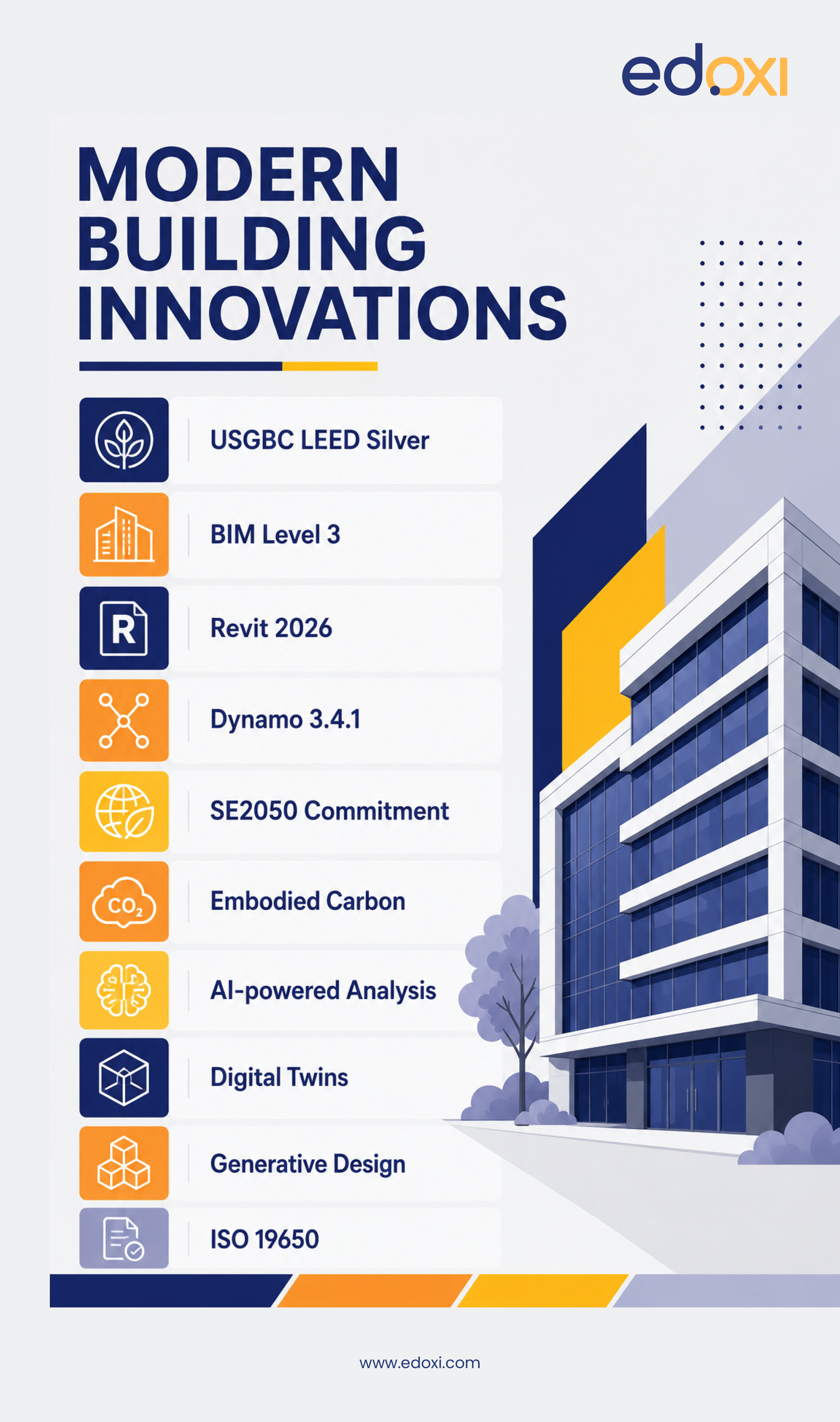
Career scope in 2026 is increasing in tandem with the BIM market. The Indian BIM industry itself has scaled up to ₹3,500 crore in 2026, posting a robust CAGR of ~30% due to smart cities, mega infrastructure projects, and international demand for BIM outputs.
Here’s a table with a quick global comparison of Revit Structure roles and salaries in 2026.
Table 1: Global Comparison of Revit Structure Roles & Salaries in 2026
| Region | Average Salary Range |
| India | ₹3 - ₹12 LPA (early–mid) / ₹15L+ senior |
| Middle East (UAE, Qatar) | $18,000 - $45,000 |
| United States (US) | $78,000 - $109,000+ |
| United Kingdom (UK) | £35,000 - £65,000 |
| Australia | AUD 70,000 -120,000 |
This comparison is based on reports and salary guides from Salary.com to provide a clear understanding of the Revit landscape.
The top job roles that require Revit Structure software skills are:
In view of the growing need for BIM professionals around the world, proficiency in using Revit Structure software paves the way for career opportunities in various industries, including the construction industry, the infrastructure industry, and the engineering industry.
|
Revit Structure vs AutoCAD for Careers Autodesk Revit Structure is better for modern BIM careers, while AutoCAD is mainly used for 2D drafting.
For high-paying, future-ready roles in construction and engineering, Revit Structure skills offer a clear advantage over AutoCAD. |
Here are the top companies actively hiring Revit Structure Professionals in 2026:
Expert Quote"Today, employers expect Revit Structure professionals to do more than create 3D models. The most sought-after candidates can develop accurate structural models, coordinate effectively with multidisciplinary BIM teams, and produce construction-ready documentation. These practical skills often make a stronger impression on hiring managers than software proficiency alone."- Senior BIM Manager, Structural Engineering Industry |
Here are the key takeaways that highlight why Revit Structure skills are essential for career growth in 2026:
The most important Revit Structure skills include 3D structural modelling, reinforcement detailing, clash detection, BIM coordination, and construction documentation, as these align with current industry demand for accurate, collaborative BIM workflows.
Yes, Revit Structure is a strong career option in India due to rapid BIM adoption in infrastructure and construction projects, with increasing demand for skilled professionals across metro, smart city, and global outsourcing projects.
You can work as a BIM Modeller, Structural Engineer, BIM Coordinator, Revit Technician, or BIM Manager, with opportunities in construction companies, design firms, and global engineering consultancies.
In India, salaries typically range from ₹3–8 LPA for mid-level roles, while experienced professionals can earn ₹10 LPA+, and global salaries are significantly higher depending on experience and location.
Highlight specific project experience, such as 3D modelling, reinforcement detailing, clash detection, and BIM coordination, along with tools used and measurable outcomes to demonstrate real-world expertise.