Leave your message to get our quick response
edoxi automated message icon

CAST 614 - Advanced Network Defence Course in Dubai

Cybersecurity concept with laptop, digital shield icon, and data stream background illustrating advanced network defense and information security.
Edoxi’s 40-hour Advanced Network Defence (AND) course in Dubai equips security professionals with advanced skills to design, implement, and manage robust enterprise network defences against cyber threats. This EC-Council-accredited course covers advanced firewall configuration, intrusion detection systems, and network forensics. Training provides dedicated lab environments for implementing advanced firewall configurations, intrusion detection systems, and endpoint protection strategies. Enrol now to become an Advanced Network Defence Professional in Dubai. 
Course Duration
40 Hours
Corporate Days
5 Days
Learners Enrolled
100+
Modules
9
star-rating-icon1
star-rating-icon2
star-rating-icon3
Course Rating
5
star-rating-5
Mode of Delivery
Online
Classroom
Certification by

What Do You Learn from Edoxi's CAST 614 - Advanced Network Defence Training

Advanced Firewall Configuration & Hardening
Learn how to configure firewalls to protect against advanced threats. Master stateful packet filtering and hardening techniques for enhanced network defence.
Intrusion Detection & Prevention Systems (IDS/IPS)
Understand how to deploy and configure IDS/IPS solutions. Detect, prevent, and respond to network intrusions and potential breaches effectively.
Network Forensics & Incident Response
Gain skills in volatile memory analysis and memory dump processes. Learn to collect digital evidence and respond to security incidents efficiently.
Zero-Trust Architecture Implementation
Implement a zero-trust security framework in enterprise networks. Use Network Access Control (NAC) and 802.1X authentication for secure access control.
Secure Protocol Analysis
Analyse network traffic to uncover suspicious patterns. Use advanced inspection techniques to detect and address potential threats.
Enterprise-Level Security Controls
Apply Context-Based Access Control (CBAC) and Reflexive ACLs. These tools help reduce risk in large-scale network environments.

About Our CAST 614 - Advanced Network Defence course in Dubai

Edoxi’s 40-hour CAST 614 - Advanced Network Defence course in Dubai is designed to equip cybersecurity professionals with the advanced skills required to protect enterprise networks against modern cyber threats. This EC-Council-accredited course is ideal for firewall administrators, network security engineers, and system architects responsible for securing complex IT environments across organisations.

The course includes hands-on, EC-Council-authorised labs that enable participants to apply advanced network defence techniques in real-world scenarios. Practical exercises focus on perimeter security hardening, advanced firewall filtering, intrusion detection and prevention, and memory analysis, ensuring learners gain both technical depth and operational confidence.

Through this training, participants develop the expertise needed to design, implement, and manage robust network security architectures. Key competencies include advanced firewall configuration, intrusion prevention systems (IPS), network traffic analysis, and threat mitigation strategies. These in-demand skills are highly valued by government entities, financial institutions, and telecommunications organisations across Dubai and the UAE.

Edoxi also offers customised corporate Advanced Network Defence training, tailored to an organisation’s specific infrastructure, compliance requirements, and threat landscape. Corporate teams benefit from structured, team-based learning that improves security consistency, reduces organisational risk, and enhances incident response readiness. This enterprise-focused training approach strengthens overall network resilience and supports long-term cybersecurity maturity

Key Features of Edoxi's CAST 614 - Advanced Network Defence Training

EC-Council Accredited Labs

Access industry-standard security labs designed by EC-Council for practical hands-on learning and real-world scenario training.

CAST Advanced Security Training Materials

Receive courseware covering advanced network security concepts, methodologies, and implementation strategies.

Enterprise-Level Security Simulations

Participate in simulated enterprise environments to implement and test advanced security controls and architectures.

Server Hardening Exercises

Practice hardening Windows Server 2008 environments, implementing TPM security, and securing critical infrastructure components.

Web Application Protection Labs

Learn to defend against Cross-Site Scripting (XSS), SQL Injection, and other OWASP Top Ten vulnerabilities through practical exercises.

Memory Analysis Workshops

Master volatile memory analysis techniques to identify and mitigate malware that evades traditional security controls.

Who Can Join Our CAST 614 - Advanced Network Defence Course in Dubai?

Firewall Administrators

Professionals responsible for configuring and maintaining network security infrastructure.

System Architects

IT professionals who design and implement secure network environments.

System Administrators

Technical staff managing server infrastructure and system security controls.

Windows Administrators

Specialists focused on securing Microsoft environments against advanced threats.

Advanced Network Defence Course Modules

Module 1: Firewalls
  • Chapter 1.1: Firewall Fundamentals

    • Lesson 1.1.1: Firewalls
    • Lesson 1.1.2: Firewall Types: Stateless Packet Filters
  • Chapter 1.2: Securing Remote Access

    • Lesson 1.2.1: Improving Device Remote-Access Security
    • Lesson 1.2.2: Locking Down the Console Port
    • Lesson 1.2.3: Protecting Terminal Lines
    • Lesson 1.2.4: Establishing Encrypted Communications
    • Lesson 1.2.5: Configuring HTTPS
    • Lesson 1.2.6: Configuring SSH
Module 2: Advanced Filtering
  • Chapter 2.1: Filtering Techniques

    • Lesson 2.1.1: Advanced Filtering Techniques
    • Lesson 2.1.2: Ingress Filtering
    • Lesson 2.1.3: Egress Filtering
    • Lesson 2.1.4: Source Address Verification (SAV)
    • Lesson 2.1.5: uRPF
  • Chapter 2.2: Filtering Strategies and Hardening

    • Lesson 2.2.1: Additional Filtering Considerations
    • Lesson 2.2.2: Time-Based ACLs
    • Lesson 2.2.3: Reflexive ACLs
    • Lesson 2.2.4: Reflexive ACL vs. Static ACL
    • Lesson 2.2.5: Context-Based Access Control (CBAC)
    • Lesson 2.2.6: Essential Steps to Harden Routers
Module 3: Firewall Configuration
  • Chapter 3.1: Stateful Filtering and Application Proxies

    • Lesson 3.1.1: Advanced Filtering Techniques
    • Lesson 3.1.2: Firewall Types: Stateful Packet Filters
    • Lesson 3.1.3: Application Proxies
    • Lesson 3.1.4: Application Proxies vs. Stateful Packet Filters
  • Chapter 3.2: Web Application Firewalls

    • Lesson 3.2.1: Web Application Firewalls
    • Lesson 3.2.2: Web Application Firewall Types
    • Lesson 3.2.3: Web Application Firewall Products
  • Chapter 3.3: Firewall Architecture and Perimeter Design

    • Lesson 3.3.1: Firewall Architecture
    • Lesson 3.3.2: Screened Subnet Firewall
    • Lesson 3.3.3: The Classic Firewall Architecture
    • Lesson 3.3.4: Belt and Braces Firewall
    • Lesson 3.3.5: Separate Services Subnet
    • Lesson 3.3.6: Fortress Mentality
    • Lesson 3.3.7: De-parameterization
    • Lesson 3.3.8: Perimeter Configuration
Module 4: Hardening Systems
  • Chapter 4.1: Hardening Windows and Linux Systems

    • Lesson 4.1.1: Windows NT/2000/2003 and XP
    • Lesson 4.1.2: Windows 2000/2003/XP
    • Lesson 4.1.3: Windows 2003
    • Lesson 4.1.4: Windows Vista
    • Lesson 4.1.5: Server 2003 Architecture
    • Lesson 4.1.6: Broken Kernel
    • Lesson 4.1.7: Modes of the OS
    • Lesson 4.1.8: UNIX/Linux
  • Chapter 4.2: Hardening Practices and Compliance

    • Lesson 4.2.1: Secure Server Guidelines
    • Lesson 4.2.2: Hardening Systems
    • Lesson 4.2.3: Security Compliance Manager
    • Lesson 4.2.4: Device Security
    • Lesson 4.2.5: Essential Steps to Harden Switches
Module 5: Intrusion Detection and Prevention
  • Chapter 5.1: Introduction to IDS/IPS

    • Lesson 5.1.1: Why Intrusion Detection?
    • Lesson 5.1.2: Windows NT/2000/2003 and XP
    • Lesson 5.1.3: Fortress Mentality
    • Lesson 5.1.4: Intrusion Detection 101
    • Lesson 5.1.5: What is Intrusion Detection?
    • Lesson 5.1.6: False Positives
    • Lesson 5.1.7: Topology Concerns
    • Lesson 5.1.8: Recommended in Most Circles
    • Lesson 5.1.9: Realistic
  • Chapter 5.2: Intrusion Prevention Systems

    • Lesson 5.2.1: Intrusion Prevention
    • Lesson 5.2.2: Types of IPS
    • Lesson 5.2.3: Host-Based Intrusion Prevention Systems
  • Chapter 6.1: Web Application Vulnerabilities

    • Lesson 6.1.1: Windows NT/2000/2003 and XP
    • Lesson 6.1.2: OWASP Top 10
    • Lesson 6.1.3: Injection Flaws
    • Lesson 6.1.4: Cross-Site Scripting
    • Lesson 6.1.5: Broken Authentication
    • Lesson 6.1.6: Insecure Cryptographic Storage
  • Chapter 6.2: Tools and Techniques

    • Lesson 6.2.1: Reverse Engineering Web Apps
    • Lesson 6.2.2: Tools
    • Lesson 6.2.3: Hackbar
    • Lesson 6.2.4: Tamper Data
    • Lesson 6.2.5: The Two Main Attacks for Web
    • Lesson 6.2.6: XSS
    • Lesson 6.2.7: SQL Injection
    • Lesson 6.2.8: xp_cmdshell
  • Chapter 6.3: Defensive Practices

    • Lesson 6.3.1: More Tools
    • Lesson 6.3.2: SQL Inject Me
    • Lesson 6.3.3: XSS ME
    • Lesson 6.3.4: Choose the Right Database
    • Lesson 6.3.5: Practice, Practice, Practice
    • Lesson 6.3.6: Tutorials
    • Lesson 6.3.7: Mutillidae
    • Lesson 6.3.8: Web Application Firewalls
    • Lesson 6.3.9: Components of Web Application Firewall
Module 7: Memory Analysis
  • Chapter 7.1: Volatile Data and Processes

    • Lesson 7.1.1: Data Types Revisited
    • Lesson 7.1.2: Volatile Data
    • Lesson 7.1.3: System Date and Time
    • Lesson 7.1.4: Current Network Connections and Open Ports
    • Lesson 7.1.5: Processes That Opened Ports
    • Lesson 7.1.6: Cached NetBIOS Names
    • Lesson 7.1.7: Users Currently Logged On
    • Lesson 7.1.8: Internal Routing
    • Lesson 7.1.9: Running Processes
  • Chapter 7.2: Process and Memory Tools

    • Lesson 7.2.1: Pslist
    • Lesson 7.2.2: Trivia
    • Lesson 7.2.3: Pslist –t
    • Lesson 7.2.4: Tasklist
    • Lesson 7.2.5: Tlist
    • Lesson 7.2.6: Running Services
    • Lesson 7.2.7: Open Files
    • Lesson 7.2.8: Process Memory Dumps
Module 8: Endpoint Protection
  • Chapter 8.1: Network Access Control (NAC)

    • Lesson 8.1.1: Introduction to NAC
    • Lesson 8.1.2: NAC Defined
    • Lesson 8.1.3: NAC General Architecture
    • Lesson 8.1.4: NAC General Architecture Illustrated
    • Lesson 8.1.5: NAC Concepts
    • Lesson 8.1.6: Inline NAC
    • Lesson 8.1.7: Out-of-Band NAC
    • Lesson 8.1.8: Identifying NAC Requirements
  • Chapter 8.2: User-Based Access and NAP

    • Lesson 8.2.1: Implementing User-Based Identity Access Control
    • Lesson 8.2.2: Network Access Protection (NAP)
    • Lesson 8.2.3: NAP Components
    • Lesson 8.2.4: NAP Enforcement
    • Lesson 8.2.5: NAP Best Practices
    • Lesson 8.2.6: 802.1X
    • Lesson 8.2.7: EAP Explained
Module 9: Securing Wireless
  • Chapter 9.1: Wireless Security Concepts

    • Lesson 9.1.1: Wireless Tools
    • Lesson 9.1.2: Wireless Vulnerabilities Summary
    • Lesson 9.1.3: MAC Filtering
    • Lesson 9.1.4: Hiding Access Points
    • Lesson 9.1.5: Hijacking
    • Lesson 9.1.6: Jamming
    • Lesson 9.1.7: Identifying Targets
    • Lesson 9.1.8: Wardriving
    • Lesson 9.1.9: Sniffing on Wireless
  • Chapter 9.2: Attacking and Protecting Wireless

    • Lesson 9.2.1: Attacking Encrypted Networks
    • Lesson 9.2.2: WEP Data
    • Lesson 9.2.3: The Other Case
    • Lesson 9.2.4: Reality
    • Lesson 9.2.5: WPA Tools
    • Lesson 9.2.6: WPA
    • Lesson 9.2.7: LEAP
    • Lesson 9.2.8: Asleep
    • Lesson 9.2.9: Comparison

Download CAST 614 - Advanced Network Defence Course Brochure

Lab Activities and Practical Sessions in the Advanced Network Defence Course

This EC-Council-accredited CAST 614 - Advanced Network Defence Course in Dubai provides dedicated lab environments for implementing advanced firewall configurations, intrusion detection systems, and endpoint protection strategies. Participants engage in memory analysis exercises and server hardening techniques using industry-standard tools. Activities include

Securing the Perimeter

Configure border security controls to protect enterprise networks from external threats.

Advanced Filtering

Implement sophisticated packet filtering techniques to regulate network traffic flow.

Selecting a Firewall Architecture

Design appropriate firewall deployments based on organisational security requirements.

Hardening

Apply security hardening techniques to reduce the attack surface of systems.

Server 2008 Lab

Secure Windows Server environments against common vulnerabilities and exploits.

TPM

Configure Trusted Platform Module for hardware-based security authentication.

Intrusion Detection

Deploy and configure IDS/IPS solutions to identify and block malicious activities.

Protecting Web Apps

Implement controls to defend web applications against common attack vectors.

Memory Analysis

Perform volatile memory forensics to detect sophisticated malware and intrusions.

CAST 614 - Advanced Network Defence Course Outcomes and Career Opportunities in Dubai

The Advanced Network Defence course provides a robust foundation for career advancement in the cybersecurity sector in Dubai. Here are some outcomes you can expect after completing the training

Course Outcome Image
Design and implement secure enterprise network architectures
Configure and manage advanced firewall technologies and security policies
Deploy and optimise intrusion detection and intrusion prevention systems (IDS/IPS)
Perform advanced network traffic analysis and filtering
Secure network perimeters against sophisticated external and internal threats
Conduct memory analysis and forensic investigation for incident response

Job Roles to Pursue After CAST 614 - Advanced Network Defence Course in Dubai

  • Defensive Cybersecurity Specialist
  • Network Operations Analyst
  • Systems Security Administrator
  • Threat Analyst
  • Incident Response Analyst
  • Firewall Administrator
  • Computer Network Defence Analyst
  • Security Operations Centre (SOC) Analyst
  • Vulnerability Assessment Specialist
  • Digital Forensics Examiner

Advanced Network Defence Training Options

Classroom Training

  • 40-hour Advanced Network Defence Course in Dubai

  • Hands-On EC-Council Accredited Labs

  • Small-Group Interactive Learning Environment

  • Direct Access to Security Experts

  • Real-Time Problem-Solving Sessions

Live Online Training

  • 40-hour Advanced Network Defence Online Training Course

  • Remote Access to Lab Environment

  • Interactive Virtual Classroom Experience

  • Flexible Scheduling Options

  • Session Recordings for Review

Corporate Training

  • 5-day tailored corporate training

  • Customised Security Curriculum Development

  • Delivery at On-Site/Edoxi or Hotel

  • Team-Based Security Exercises

  • Industry-Specific Implementation Strategies

  • Fly-Me-A-Trainer Option

Do You Want a Customised Training for CAST 614 - Advanced Network Defence?

Get expert assistance in getting your CAST 614 - Advanced Network Defence Course customised!

How to get the CAST 614 - Advanced Network Defence Certification in Dubai?

Here’s a four-step guide to becoming a certified CAST 614 - Advanced Network Defence professional.
Do You Want to be a Certified Professional in CAST 614 - Advanced Network Defence?

Join Edoxi’s CAST 614 - Advanced Network Defence Course

Why Choose Edoxi for Advanced Network Defence Training in Dubai?

The following are some of the reasons why you should choose Edoxi for the Advanced Network Defence training in Dubai

Award-Winning EC-Council Training Center

Recognised as EC-Council ATC of the Year for 2023 and 2024, showcasing our excellence in cybersecurity education.

Proven Track Record

Trained over 10,000 professionals with a consistent record of success in certifications and career advancement.

Industry-Recognised Curriculum

Edoxi delivers the official EC-Council Advanced Network Defence (CAST 614) program, ensuring alignment with global industry standards.

Expert Instructors with Industry Experience

Learn from EC-Council certified security professionals with practical experience implementing enterprise network defence solutions.

Complete Cyber Security Career Pathway

Access a full spectrum of cybersecurity courses, including CEH, CHFI, and CND, creating a comprehensive professional development roadmap for your network security career.

students-image

Edoxi is Recommended by 95% of our Students

Meet Our Mentor

Our mentors are leaders and experts in their fields. They can challenge and guide you on your road to success!

mentor-image

Satendra K

Satendra Singh Khari is a renowned cybersecurity expert and the Chief Technology Officer at Edoxi, where he leads the CEH v13 AI program. With over 12 years of experience, he has trained more than 10,000 professionals and earned recognition in the Circle of Excellence for 2023 and 2024. Mr. Khari holds multiple industry certifications, including CISSP, CISM, CEH, CPENT, and CREST, which showcase his expertise in vulnerability assessment, penetration testing, and incident handling.

His practical insights, gained during his tenure as Head of Information Security in Malaysia, enhance the learning experience by providing students with essential technical skills and a clear path to career advancement. Recognized as a leader in his field, he has received the Internet 2.0 Outstanding Leadership Award for three consecutive years (2022-2024), reflecting his dedication to empowering the next generation of cybersecurity professionals.

FAQ

What security technologies will I learn in this CAST 614 - Advanced Network Defence Course in Dubai?
Participants master advanced firewall configurations, intrusion detection systems, network access control technologies, and memory analysis techniques using industry-standard tools and methodologies.
Is this CAST 614 - Advanced Network Defence Course in Dubai recognised in the cybersecurity industry?
Yes, the course is EC-Council accredited, providing industry-recognised credentials that enhance your professional standing in the cybersecurity field.
What skills will I develop through this CAST 614 - Advanced Network Defence Training in Dubai?
The CAST 614 - Advanced Network Defence Course develops practical skills in implementing advanced security controls, analysing network traffic, responding to security incidents, and hardening systems against sophisticated attacks.
Can we arrange customised corporate training for our security team?
Absolutely! We offer tailored corporate training programs that address your organisation's specific security challenges and infrastructure requirements, delivered either at your premises or our training center.
Does the CAST 614 - Advanced Network Defence Course in Dubai cover zero-trust architecture implementation?
Yes, the CAST 614 - Advanced Network Defence Course in Dubai includes comprehensive coverage of zero-trust architecture principles, including practical implementation using Network Access Control (NAC) and 802.1X authentication protocols.
Which industries benefit most from this Advanced Network Defence training?
Banking, government agencies, telecommunications, healthcare, and retail organisations benefit significantly from having staff trained in advanced network defence techniques to protect sensitive data and infrastructure.
Will I receive a certification after completing the course?

After receiving the course, you can receive:

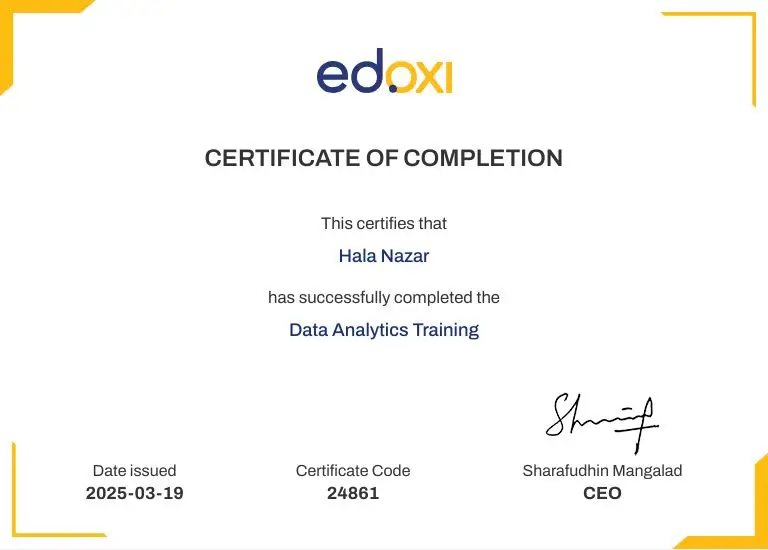
    • Course Completion Certificate from Edoxi Training Institute after completing the project-based internal assessment.
    • EC-Council Accredited Training Certificate demonstrating completion of an authorised EC-Council security training program.
    • The KHDA-approved training Certificate provides additional credibility in the Dubai job market.