Request a Callback

+971 43801666
 Jun 04, 2026
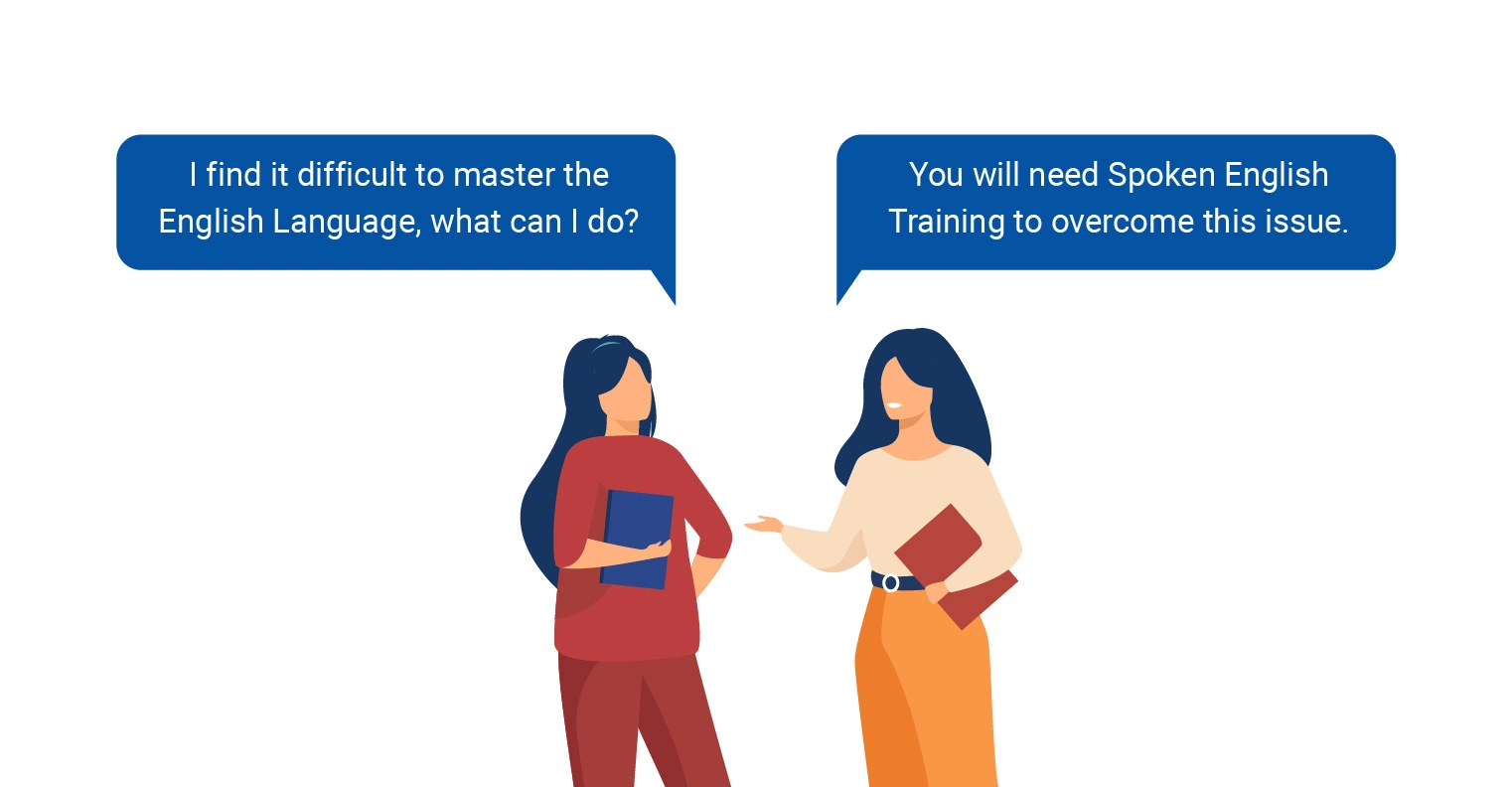
English language learning in 2026 faces major challenges, such as poor speaking confidence, a lack of real communication practice, over-dependence on AI tools, limited vocabulary usage in real contexts, and difficulty in achieving fluency despite studying for years. At the same time, learners struggle with pronunciation accuracy and hesitation in spontaneous conversations, even when they understand grammar rules well.
English continues to be the world’s most widely used global language, with over 1.5 billion speakers and learners worldwide, but access to effective speaking practice and quality instruction remains uneven across regions.
Recent trends in English language learning show a clear shift toward AI-assisted learning, blended classrooms, and communication-focused training, replacing traditional grammar-heavy methods. However, this transition has also created a gap between theoretical knowledge and practical fluency in real-life and workplace situations.
In this blog, we will explore the major challenges in English language learning today and the most effective, future-ready solutions to overcome them in 2026.
The following sections explore the most common challenges in English language learning. Every topic includes an Overview, common Problems, and effective Solutions to provide a complete understanding of the learner journey.
Limited Vocabulary Retention in English Language Learning
Fear of Speaking and Low Confidence in English Learners
Overdependence on the Native Language in English Learning
Outdated Curriculum and the Gap Between Classroom and Real-Life English
The Intermediate Plateau in English Learning
Mixed-Level Classrooms and Inconsistent Teaching Quality in English Learning
Low Motivation and High Dropout Rates in English Learning
You study 20 words on Monday. By Wednesday, you remember 5. By Friday, 2. This is not a memory problem; it is a method problem. Words studied in isolation are forgotten fast. Words learned in real context stick for life.
What It Means: Learners struggle to remember and actively use new English words, especially informal language like slang, idioms, and dialects.
Who It Affects: This issue impacts all learners, but it is more common among beginners and intermediate learners who rely mainly on textbooks instead of real-world content.
Key Insight (2026): Studies show that learning words in context helps learners retain vocabulary up to 3 times longer, while spaced repetition can improve retention by up to 200% compared to traditional memorisation.
Why It Matters: Limited vocabulary makes it difficult to form sentences, which directly increases fear and hesitation in speaking.
Many learners study hundreds of English words but struggle to remember or use them naturally in conversations.
| The Problem | Why Does It Block Your Progress |
| Studying word lists in isolation | The brain has no context to anchor the word. Without context, the memory trace is weak and disappears within days. |
| Textbooks teach formal vocabulary only | Real conversations use informal English. Learners arrive fluent in written English but confused by casual speech. |
| No repetition strategy in place | The forgetting curve means 80% of new information is lost within 24 hours without structured review. |
| Learning words disconnected from interests | The brain prioritises emotionally relevant information. Studying random vocabulary fails to trigger long-term encoding. |
Using contextual learning and consistent review methods helps learners remember vocabulary longer and use it naturally.
| The Solution | How to Apply | Tool/ Resource |
| Spaced Repetition | Study a word today. Review in 2 days, then 7 days, then 21 days. The brain remembers what it revisits at increasing intervals. | Anki (free), Quizlet |
| Learn Words in Sentences | Never study a word alone. Write it in a real sentence from your own life. "She felt melancholy after the meeting." Context creates memory. | Your own notebook or notes app |
| Connect to Your Interests | A doctor learns faster from medical news. A football fan from the match commentary. Choose media in your field. | Podcasts, YouTube, industry blogs |
| Daily Media Immersion | 20 minutes of English content daily exposes you to 800–1,000 words per session in a natural context. | Netflix, TED Talks, BBC Learning English |
Poor vocabulary development leads to fear of speaking and low confidence.
Read Also: How to Speak English Fluently and Confidently
You know the word. You know the grammar rule. But when someone speaks to you in English, your mind goes blank, and your mouth stays shut. This is the most universally reported barrier in all ESL research, and it is solvable.
What It Is: Psychological anxiety stops learners from speaking English, even when they know the vocabulary and grammar.
Who It Affects: Most common among beginner and intermediate learners, creating a cycle: low confidence → no practice → no improvement.
2026 Research Insight: Social and Emotional Learning (SEL) studies show that psychological safety in the classroom is the strongest predictor of speaking performance. Learners who feel judged tend to stop trying altogether.
Why It Matters: Fear of speaking blocks active practice, which is essential for improvement.
Speak confidently in public at any level with the Public Speaking Course.
Fear of mistakes and embarrassment often stops learners from practising spoken English regularly.
Consistent speaking practice in safe environments helps learners become confident communicators.
| The Problem | Why does it block your progress |
| Fear of mispronouncing words | Learners avoid speaking entirely to avoid embarrassment, but avoidance means zero practice, which means zero improvement |
| Comparing yourself to native speakers | Native-speaker perfection is an unrealistic, anxiety-producing standard. In 2026, the goal is intelligibility — being clearly understood — not native accent. |
| No safe space to practise speaking | Without low-pressure environments, learners never build the speaking reflex needed for real conversations. |
| Grammatical self-consciousness mid-sentence | Focusing on grammar while speaking splits cognitive attention. The sentence falls apart. Confidence drops further. |
KEY INSIGHT Speaking confidence grows faster when you stop translating from your native language before every sentence. Here's your guide on: How to Improve your Spoken English
This fear is worsened by over-reliance on the native language, as mentally translating slows responses and increases anxiety.
You hear a question in English. Your brain translates it into Malayalam (or Arabic, or Hindi), thinks of the answer in that language, then translates back to English before speaking. This process is slow, exhausting, and the main thing standing between you and fluency.
What It Is: Learners habitually process English through their native language before responding, instead of thinking and responding directly in English.
Who It Affects: All ESL learners are affected, but it is most severe for classroom-only learners who lack sustained immersion.
Why It Happens: The brain naturally follows its strongest neural pathways. Until English pathways are reinforced, translation through the native language remains the default strategy.
Why It Matters: Over-reliance on the native language slows speech and creates uncertainty, preventing learners from using authentic English effectively.
Many learners think in their native language first and then translate into English.
| The Solution | How to Apply it | Tool/Resource |
| Solo Speaking Practice | Speak to yourself for 5 minutes every morning. Narrate your plans, describe what you see, and explain a problem. Zero social pressure. Full speaking practice. | Mirror, voice recorder, or phone camera |
| Shift the Goal: Intelligibility over Accent | Stop trying to sound like a native speaker. Focus on being clearly understood. This one mindset shift removes 70% of speaking anxiety instantly. | Modern ESL curriculum standard (2026) |
| AI Conversation Practice | Use AI chatbots to simulate real conversations — no judgment, no embarrassment, available at any hour. Ask for corrections after every response. | ChatGPT, Speak app, Google Bard |
| Structured Class with Small Groups | A safe, supportive class of 8–12 learners guided by a qualified instructor builds speaking confidence faster than solo study alone. | Spoken English Training |
Immersion techniques help learners build direct English-thinking habits.
| The Problem | Why Does It Block Your Progress |
| Translating every sentence before speaking | Creates a 3–5 second delay in every response. In real conversation, this makes communication painful and discourages further practice. |
| Thinking in the native language, speaking in English | Translated sentences sound unnatural. Idioms, word order, and cultural nuance get lost in translation. You come across as robotic, not fluent. |
| Reverting to the native language when challenged | Under pressure (fast speech, unfamiliar topic, tired), learners collapse back into their native language — resetting progress. |
KEY INSIGHT: As you build direct English thinking, you will notice your textbooks feel increasingly artificial. This reliance pushes learners back to textbook English, making it harder to bridge the gap between classroom learning and real-life language use.
Your textbook teaches: "Excuse me, may I trouble you for directions?" Real English sounds like: "Hey, do you know where the metro is?" If your only English input is a textbook, you will arrive in the real world completely unprepared.
What It Is: The gap between formal classroom English and the fast, informal, idiomatic English used in workplaces, universities, and daily life.
Who It Affects: Learners who rely mainly on textbooks or institutional curricula, especially those preparing for professional or international contexts.
2026 Context: Many curricula still use outdated materials that lack professional jargon, cultural nuance, digital communication styles, and informal registers, which make up 95% of real conversations.
Why It Matters: Outdated curricula leave learners feeling proficient in classroom English but helpless in real-world situations.
Formal classroom English is very different from everyday communication.
| The Solution | How to Apply it | Tool/Resource |
| English-Only Zones | Designate times or places where English is the only option: your commute, your lunch break, or the first 30 minutes of every study session. | Self-commitment, study groups |
| English Self-Talk | Before bed, mentally narrate your day in English. Short, simple sentences. "I woke at 7. I had a difficult meeting at 10." This builds the direct English-thinking reflex. | Voice recorder app |
| Mixed-Language Study Groups | In a group where no two people share a native language, English becomes the only viable communication tool, creating organic immersion. | Language exchange apps: Tandem, HelloTalk |
| Label Your Physical World | Post English sticky notes on objects at home or work. This trains your brain to assign English words to physical reality, bypassing translation. | Sticky notes, Duolingo Word Cards |
Modern English learning should focus on communication, industry relevance, and authentic content.
| Situation | What Textbook Teaches | Real World Uses |
| Greeting a colleague | "Good morning. How do you do?" | "Morning! How's it going?" |
| Asking for help | "Could you please assist me with this matter?" | "Can you give me a hand with this?" |
| Declining an offer | "I am unable to accept your offer at this time." | "Thanks, but I'll pass." |
| Expressing agreement | "I concur with your statement. | "Totally agree!" / "That's fair." |
| Apologising informally | "I sincerely apologise for the inconvenience." | "Sorry about that!" / "My bad." |
KEY INSIGHT Once you shift to authentic, real-world English, you will hit the intermediate plateau — the point where progress feels invisible even though it is still happening. That is Challenge #5.
This curriculum gap contributes to the intermediate learning plateau (Challenge #5), slowing progress despite classroom competence.
As a beginner, every week felt like progress. You learned 20 new words yesterday; you knew zero. After 6–12 months, you can hold a conversation, but suddenly, improvement becomes invisible. You are good enough to get by but not good enough to feel fluent. This is the plateau, and it is where most adult learners quit.
What It Is: A stage where visible progress slows dramatically, grammar feels solid, basic communication is possible, but fluency and naturalness remain out of reach.
Who It Affects: Learners with 6–18 months of study who have left the beginner stage but not yet reached advanced fluency.
2026 Data:6.1% of adult ESL learners drop out specifically due to perceived lack of progress, almost all at the intermediate stage. (Journal of Adult EFL Research, 2025)
Connection: The plateau is worsened by mixed-level classrooms (Challenge #6). When stuck in a class too easy for you, the plateau can last years.
Break the intermediate plateau and advance your skills with the Advanced English Course.
After reaching the intermediate level, visible improvement becomes slower and harder to notice.
| The Solution | How to Apply it | Tool/Resource |
| Authentic Industry Materials | Engineers read tech blogs. Healthcare workers study case summaries. Finance professionals practise with real email chains. Match your English input to your real professional world. | Industry-specific blogs, LinkedIn, Reuters |
| Task-Based Learning (TBLT) | Replace grammar exercises with real tasks: "Write a professional email about a problem you faced." "Summarise this news story in 3 sentences." Language emerges from doing. | Structured ESP courses, Edoxi programmes |
| Watch Without Subtitles | Start with subtitles on. After 2 weeks, switch to English-only subtitles. After 4 weeks, try without. Your ear adapts to the real speech pace. | Netflix, BBC News, YouTube |
| ESP or Professional English Course | A course built around your specific professional field closes the gap between classroom and workplace English rapidly. | Business English course |
Advanced fluency develops through active communication and challenging input.
| Area | Beginner stage - Progress is Obvious | Intermediate Plateau- Progress is Hidden |
| Vocabulary | Every word is new — learning 20/day is easy to measure | You know, "enough" gaps are now subtle and hard to see |
| Grammar | Rules are clearly right or wrong | Grammar feels fine, but the sentences still sound unnatural |
| Feedback | Teacher corrections are constant and specific | Errors are now harder for teachers to correct |
| Motivation | Every session feels rewarding and exciting | Study feels repetitive; progress feels invisible |
KEY INSIGHT Plateauing is made dramatically worse by being in the wrong classroom. Challenge #6 shows how classroom structure either breaks the plateau or extends it indefinitely.
Imagine a class where one student has never studied English and another has been speaking for five years. The teacher cannot serve both. You either feel completely lost or completely bored. Both lead to dropout.
Mixed-level classrooms often fail to meet individual learner needs.
| The Solution | How to Apply it |
| Stop Studying, Start Doing |
Set real communication tasks: summarise a podcast, write a professional email, explain a process out loud. Grammar drills at this stage produce almost no fluency gains.
|
| Weekly Speaking Records | Record yourself speaking for 60 seconds on any topic every week. Compare Month 1 to Month 3. Progress you cannot feel is visible when you hear it. |
| Deliberately Hard Content | Read content slightly above your comfort level. Watch content without subtitles. Discomfort is the signal that your brain is growing. |
| Advanced Structured Training | A course designed specifically for intermediate-to-advanced learners provides the challenge, accountability, and feedback needed to break the plateau. |
Choosing the right learning structure improves engagement and faster progress.
| The Problem | Why does it block your process |
| No placement assessment before joining a course | Advanced learners are bored. Beginners are overwhelmed. Both disengage and disengage quickly. |
| Teachers without domain expertise | In ESP and professional English, a teacher who cannot connect language to your field produces irrelevant lessons that feel like a waste of time. |
| No adaptive pathway for individual needs | A single curriculum paced for the average learner fails everyone above and below that average, which is most of the class. |
You start a course full of enthusiasm. By week six, you are making excuses to skip class. By week ten, you have stopped. You tell yourself you will restart "later." This is the most common story in adult English learning — and it is almost entirely preventable.
What It Is: The loss of the motivational drive to continue learning caused by a combination of poor teaching, irrelevant content, invisible progress, and external life pressures.
Two Types: Motivated Dropouts leave due to external pressures (work, family), and they often return. Demotivated Dropouts leave because the experience itself pushed them away; they rarely return.
2026 Data:26.6% cite lack of time (motivated). 11.9% cite poor course methodology (demotivated and permanent). 5.7% cite teacher quality (demotivated). (Journal of Adult EFL Research, 2025)
Demotivation is the endpoint of all six previous challenges left unaddressed. It is also the most fixable — with the right approach.
Poor learning experiences and invisible progress reduce consistency and long-term commitment.
| The Solution | How to Apply it | Tool/Resource |
| Diagnostic Placement Before Enrolling | Always take a placement test before joining any course. A good provider will offer this before you pay. If they do not, treat it as a warning sign. | Cambridge English free placement test |
| Choose Small Group Classes | Classes of 8–12 allow a teacher to give genuine individual attention. In groups of 25+, you receive almost no personalised feedback per session. | Edoxi course structures |
| Blended Learning Model | Combine face-to-face instruction with personalised online modules. Fast learners are not held back. Slower learners are not left behind. | Edoxi blended course format |
| AI Adaptive Self-Study | AI platforms adjust content difficulty in real time based on your individual error patterns, effectively creating a personalised curriculum. | Duolingo Max, ELSA Speak, ChatGPT |
| Dropout Reason | Rate | Dropout Type | Preventable? |
| Lack of Time (work/family) | 26.60% | Motivated | Partially — flexible scheduling helps |
| Cost of Classes | 13.90% | Motivated | Partially — look for subsidised or online options |
| Poor Course Methodology | 11.90% | Demotivated | YES — choose your provider carefully |
| Lack of Visible Progress | 6.10% | Demotivated | YES — structured goals and tracking |
| Poor Teacher Quality | 5.70% | Demotivated | YES — research your teacher before enrolling |
Small daily habits and structured goals improve consistency and long-term fluency development.
| The Solution | How to Apply it | Tool/ Resource |
| Discipline Over Motivation | Motivation is a feeling that comes and goes. Discipline is a system. 5 minutes of English use every single day beats a 2-hour session once a week — every time. | Habit tracker apps: Streaks, Habitica |
| Connect to a Personal Goal | Not "I want to learn English" but "I need English to get promoted," "to communicate with my partner's family," "to pass IELTS." Specific goals survive difficult weeks. | Written goal, visible daily |
| Use Gamification | XP points, streaks, badges, and leaderboards turn abstract progress into visible milestones. Even marking a physical calendar each day you practise has a measurable impact on consistency. | Duolingo, Busuu, and a physical calendar |
| Choose Quality Instruction |
The data is unambiguous: poor teaching causes permanent demotivation. A qualified, engaging teacher is not a luxury — it is the single most important variable in sustained adult learning.
|
Modern English learning methods combine technology, communication practice, and adaptive learning for faster fluency development.
| Method | What it does | Best Used for |
| AI Adaptive Learning | Personalises every lesson to your error patterns; gives instant pronunciation and grammar feedback at any hour | Vocabulary, speaking, mixed-level issue |
| Gamification | XP, streaks, badges, daily quests and leaderboards make consistency automatic and rewarding | Maintaining motivation and habit |
| Blended Learning | Combines face-to-face instruction with personalised online modules — each learner moves at their own pace | Mixed-level classrooms, adult learners |
| Flipped Classroom | Content studied at home; all class time used for speaking, discussion, and real communication tasks | Maximising speaking practice per session |
| Task-Based Teaching (TBLT) | Real-world tasks replace grammar drills — language emerges from doing, not memorising rules | Curriculum relevance, plateau-breaking |
| Intelligibility-First Teaching | Targets being clearly understood over a native-like accent removes performance anxiety immediately | Speaking confidence, confidence building |
Here's a simple 4-week roadmap to improve English step by step with daily practice and measurable progress.
| Timeframe | Action | What Challenge Does It Fix |
| Day 1 | Download Anki. Create your first 20-word deck from a topic you care about. | Vocabulary |
| Day 2 | Take a free Cambridge English placement test. Find your actual level. | Classroom placement |
| Day 3 | Spend 5 minutes narrating your morning plans out loud in English. Record it. | Speaking + translation |
| Week 1 | Choose one English podcast or YouTube channel in your field. Watch 15–20 minutes daily. | Vocabulary + curriculum |
| Week 2 | Use an AI chatbot (ChatGPT or Speak) for 10 minutes of conversation practice. No judgment. Just speak. | Speaking confidence |
| Week 3 | Set an English-only zone: first 20 minutes of your day, or your lunch break. Commit to it. | Native language reliance |
| Week 4 | Enrol in a course matched to your level and goal. Bring your placement result. | Classroom + motivation |
| Monthly | Record yourself speaking for 60 seconds. Compared to last month. Hear your own progress. | Plateau + motivation |
Before examining specific challenges, understand the 2026 landscape. Technology has improved dramatically, but the human barriers remain exactly where they were.
| What has improved | What still blocks learners | What is New in 2026 |
| AI-powered pronunciation feedback available 24/7 | Fear of speaking is still the most reported ESL barrier | Adaptive platforms that personalise every single lesson |
| On-demand content in every accent and dialect | Intermediate plateau progress becomes invisible | Intelligibility-first teaching: no more "sound native" pressure |
| Flexible online and blended course options | Outdated textbooks are still used in many institutions | Gamified streaks and XP replacing traditional homework |
| Global English communities online (YouTube, Discord, Reddit) | Adult learners lack time, 26.6% dropout due to work/family | Task-Based Language Teaching (TBLT) replaces grammar drills |
The tools are better. The human challenges are the same. The next six sections break each challenge into a structured table: overview, problems, and solutions, so you know exactly what you are dealing with and exactly what to do.
In 2026, English learning is no longer limited to grammar study or memorising vocabulary. The real barriers are practical low speaking confidence, overuse of native language translation, lack of real communication practice, outdated learning methods, and slow progress after the intermediate stage.
Although AI tools and modern platforms have improved access to English learning, they cannot replace consistent speaking practice and real-world usage. Fluency develops only when learners actively use English in daily communication, not when they only study it.
The key takeaway is simple: English improves through practice, not theory. Learners who focus on speaking, real-life application, and structured guidance will achieve faster and more confident fluency in 2026.
Many learners fear making mistakes, being judged, or mispronouncing words. Regular speaking practice in a supportive environment helps build confidence over time.
Learning words in context, using spaced repetition, and reviewing vocabulary regularly can help you remember and use new words more effectively.
Translating every sentence creates delays and makes speech sound unnatural. Thinking directly in English helps improve fluency and communication speed.
The intermediate plateau is a stage where progress feels slow despite continued study. Challenging content and active communication practice help learners move beyond it.