Request a Callback

+971 43801666
 Aug 27, 2026
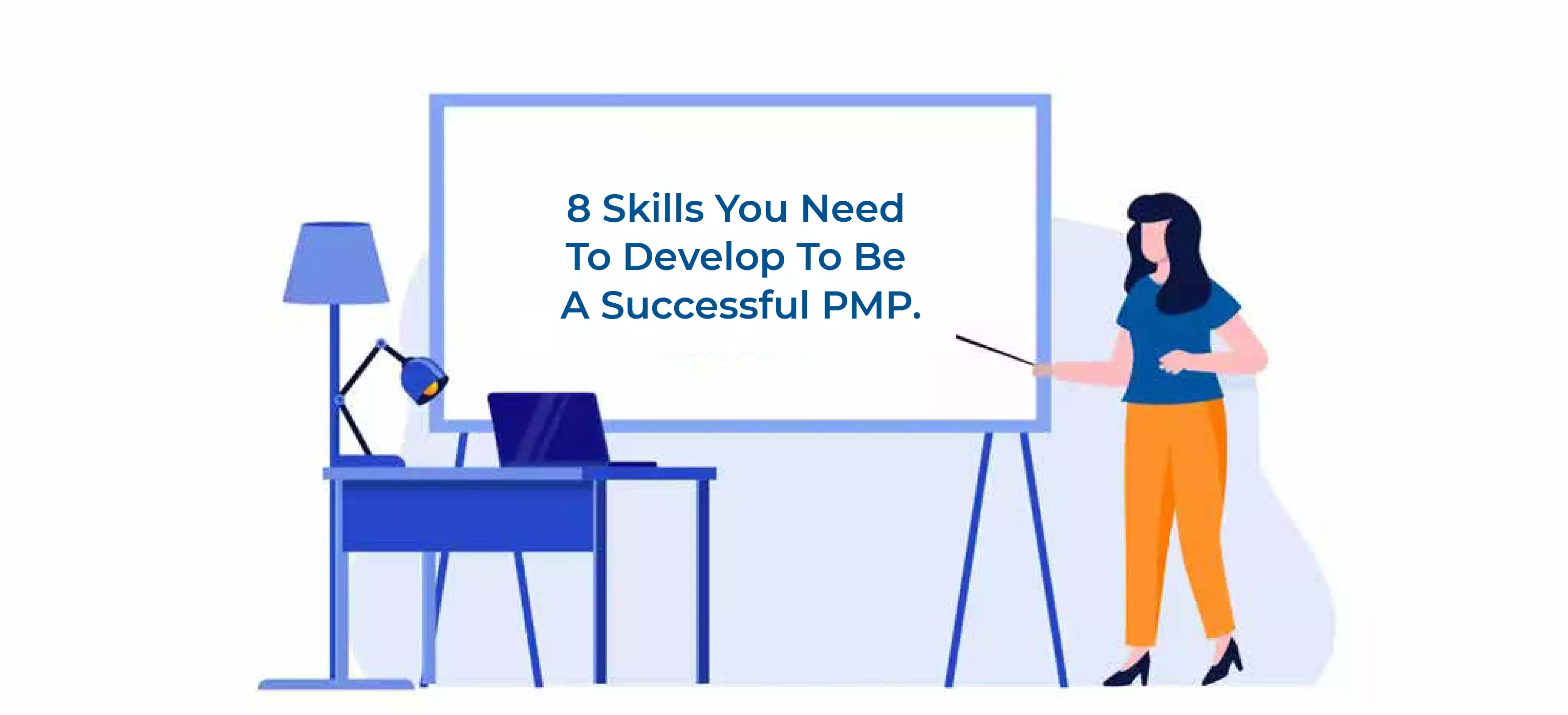
The top 8 PMP skills you need to become a successful project manager are AI-enabled decision-making, risk management, agile methodologies, data analytics, leadership, stakeholder management, strategic thinking, and change management.
Successful Project Management Professionals (PMPs) need a combination of technical, leadership, and strategic skills that align with current industry demands.
There is a huge demand for PMPs in the market, too. Therefore, understanding the key skills required for PMP professionals is essential before pursuing certification.
In 2026, companies will not only hire project managers but also seek leaders who have the latest 2026 PMP skills to lead changes, manage AI-driven processes, and achieve tangible business results.
Global demand for project management professionals is increasing rapidly. According to the Project Management Institute (PMI), up to 30 million new project professionals will be needed globally by 2035.
In order to meet these demands, the skill set of today's professionals needs to be adapted. In this blog post, we provide you with information about the top 8 project management skills in 2026, backed up by actual statistics.
Table of Contents |
|
1. What Are the Latest Project Management Trends and Statistics in 2026?
2. What Are the 8 Essential Skills Project Management Professionals Need? 3. Who Should Consider PMP Certification? 4. What are the PMP Eligibility Requirements? 5. What are the Benefits of Project Management Certification? 6. What is the Future of Project Management in 2026? 7. FAQs |
Here are the key project management trends and statistics in 2026 that you must know before we move on to the skills:
Source: Project Management Institute: Global Project Management Talent Gap Report
|
Key insight The role of the project manager has evolved into an economic necessity related to global growth and digitalisation. Only 44% of managers globally have received formal management training, highlighting the importance of professional certifications like PMP. |
As you comprehend the Fundamental Project Management Skills, equip yourself to thrive in today's market. Read our blog on An Introduction to the Project Management Professional (PMP) Certification Guide.
The 8 essential skills needed for project management professionals are:
AI-Enabled Decision-Making and Technological Proficiency
Risk Management
Agile and Hybrid Methods
Analysing Data and Interpreting Results
Leadership Skills and Emotional Intelligence
Stakeholder Management and Negotiations
Strategic Thinking and Business Planning
Change Management in Projects
AI-enabled decision-making and technical proficiency are critical requirements for PMPs in 2026 since such capabilities are necessary for handling the complexity of modern-day projects.
By serving as a "co-pilot" in the process of running an enterprise, AI facilitates the automation of mundane administrative activities and provides useful insights in advance.
Important Features of AI-Enabled Decision Making and Technical Proficiency
The important features of AI-enabled decision making and technical proficiency are:
|
Note: To thrive, PMPs should combine traditional, structured methodology with modern AI project management tools to ensure faster project delivery, enhanced accuracy, and 15-20% higher salary potential (ScienceDirect). Top AI Project Management Tools for PMPs in 2026:
|
Strategic Risk Management (SRM) refers to the process of identification, evaluation, and management of risks that can have a profound impact on the direction of the firm, hinder the achievement of future goals, and even affect the very existence of the business entity.
What are the Key Elements of Strategic Risk Management?
The key elements of strategic risk management are:
Agile and Hybrid methodologies play crucial roles in project management for 2026. Agile methodology is concerned with iterative development, feedback from customers, and adaptability, for instance, Scrum and Kanban methodologies.
The hybrid approach is a combination of predictive planning (Waterfall) and adaptive execution (Agile), providing a flexible yet structured framework.
Data analysis focuses on analysing the numbers in the data you collected to uncover any trends, correlations, or outliers. Data interpretation explains what the analysed trends mean and how they influence organisational decision-making.
Data analytics is a way to see the future by looking at all the data collected. As a field that has been used across many industries for profit, it is now seen in many domains and industries. So it is a major project management skill in 2026.
|
❓Why Data Analytics is a Critical Skill for Modern PMPs? Data analytics is a critical skill for modern PMPs as it helps in analysing historical and real-time project data. Organisations can detect early risks, improve forecasting accuracy, and save up to 15-20 hours per month through automated reporting and dashboards. According to Wellingtone State of Project Management 2026, 42% of respondents spend at least one day manually compiling project reports; 72% expect PMO responsibilities to expand. Benefits management, resource management and project prioritisation remain difficult processes to embed. |
Leadership skills and emotional intelligence are vital "power skills" required to achieve PMP certification in 2026, often accounting for 58 per cent of success in the workplace.
What are the Basic Elements of Emotional Intelligence for PMP?
According to the theory developed by Daniel Goleman, an American psychologist, author, and science journalist, the following are the main pillars of EQ that need to be in place for PMPs:
Leadership and EI for 2026 Projects
For leadership and emotional intelligence (EI) for 2026 projects, you need the following skills:
If you are interested in knowing more about the role of PMP Certification in achieving leadership skills. Read our blog ” Why is a PMP Certification Important for Your Project Management Career Path?”
Stakeholder engagement and negotiation require knowing who the stakeholders are, establishing trust by being open and transparent, and communicating effectively to ensure their interests align.
What are the Important Tactics for Efficient Stakeholder Management?
The important tactics used for efficient stakeholder management in project management are:
What are the Effective Techniques for Successful Negotiations?
The effective techniques for successful negotiations in project management are:
Successful PMP professionals need a mix of technical, analytical, and leadership skills to manage modern projects effectively.
What are the Major Aspects of Strategic Thinking and Business Planning?
The major actions to build strategic thinking and business planning are:
Change management in projects is important in PMP practice because projects rarely go exactly as planned. The major factors in change management are:
|
Key Takeaways The sources indicate a significant shift in why projects fail. In 2025, the primary barriers to success moved from technical deficiencies to organisational and governance issues. The top contributors to failure now include:
|
The PMP certification is recommended for the following:
Understanding the roles and responsibilities of a project manager helps professionals plan projects effectively, manage teams, control resources, and deliver results on time and within budget.
PMP eligibility requirements are fixed by the Project Management Institute (PMI). Here are the professional PMP certification requirements to become successful in the project management career path:
The PMP credential continues to be the most prestigious and globally acknowledged credential. The benefits of project management certification are:
Understanding why PMP certification is important for your career can help you evaluate its value in improving project management skills, credibility, and access to career opportunities.
In the world of tomorrow, a project manager can be someone who can drive transformation, innovation, and business value.
Explore the Latest PMP Exam Updates 2026: Navigating the PMBOK® Guide 8th Edition Transition.
|
A promising future lies ahead for PMP-certified professionals as organisations continue to seek structure in their project management approach to successfully implement intricate projects, undergo digital transformations, and grow internationally.
Organisations increasingly value professionals who can manage risks, collaborate across teams, and deliver projects within budget.
As industries embrace project-based models more actively, obtaining the PMP certification continues to be seen as a benchmark for the capability of managing projects according to universally accepted standards.
PMP professionals in the coming years are likely to take on roles that will go beyond the simple organisation of projects.
Contemporary project management practices require professionals to have technical knowledge along with a variety of other abilities, like data analysis, understanding the principles of agility, and effective stakeholder management.
The most important PMP skills in 2026 include leadership, risk management, Agile project management, stakeholder communication, strategic thinking, and data-driven decision making. These skills help project managers deliver projects successfully in modern digital and Agile environments.
Agile knowledge is important because many organisations now use Agile or hybrid project management approaches. PMP professionals who understand Agile frameworks can manage changing requirements, improve collaboration, and deliver faster project outcomes.
Project managers should learn tools like project scheduling software, collaboration platforms, and Agile management tools. Popular tools include Microsoft Project, Jira, Asana, Trello, and Monday.com.